
Thriving Beyond the Breach
The New Reality: Security Isn’t Just Prevention
For too long, cybersecurity was defined by prevention—the effort to build a perfect, impenetrable wall. But in the modern threat landscape, where sophisticated adversaries, supply chain vulnerabilities, and cloud complexity create an ever-expanding attack surface, absolute prevention is an unattainable myth.
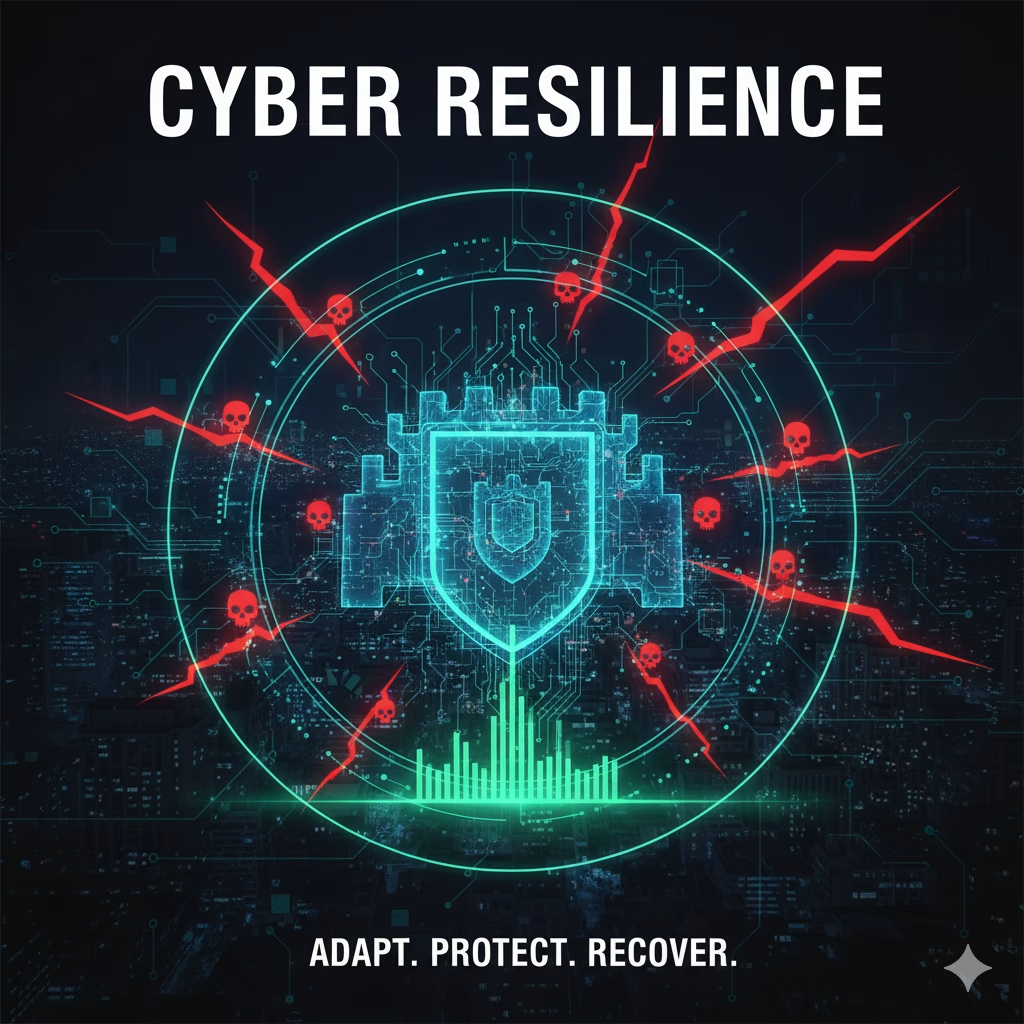
The strategic focus must shift. Cyber Resilience recognizes that while breaches are inevitable, catastrophic business failure is not. Resilience is the measure of an organization’s capacity to prepare for, respond to, and recover from cyberattacks and failures, allowing the business to continue operating critical functions with minimal disruption.
At Eden Kandinsky, we move beyond simply building walls. We engineer resilience, ensuring your organization is not only secure but is also structurally prepared to weather any digital storm and emerge stronger.
Why Resilience Matters More Than Defense
Defense (prevention) seeks to eliminate threats; Resilience seeks to eliminate the impact of threats on the business. This strategic shift has three core components:
1. Business Continuity, Not Just IT Recovery
Resilience ensures that critical business processes—revenue generation, customer service, essential operations—remain functional or are quickly restored, even if underlying IT systems are compromised or destroyed. It moves the focus from recovering servers to recovering value.
2. Operational Agility
A resilient organization can rapidly identify a successful attack, contain it before it spreads, and adapt its operating model (known as Cryptographic Agility, as detailed in our Cryptography Services) to mitigate ongoing risk. This agility minimizes downtime and reduces the attacker’s dwell time.
3. Trust and Confidence
In the aftermath of an incident, the ability to communicate clearly, restore services quickly, and prove that core data remains intact preserves customer, investor, and regulatory trust—the true differentiator in a crisis.
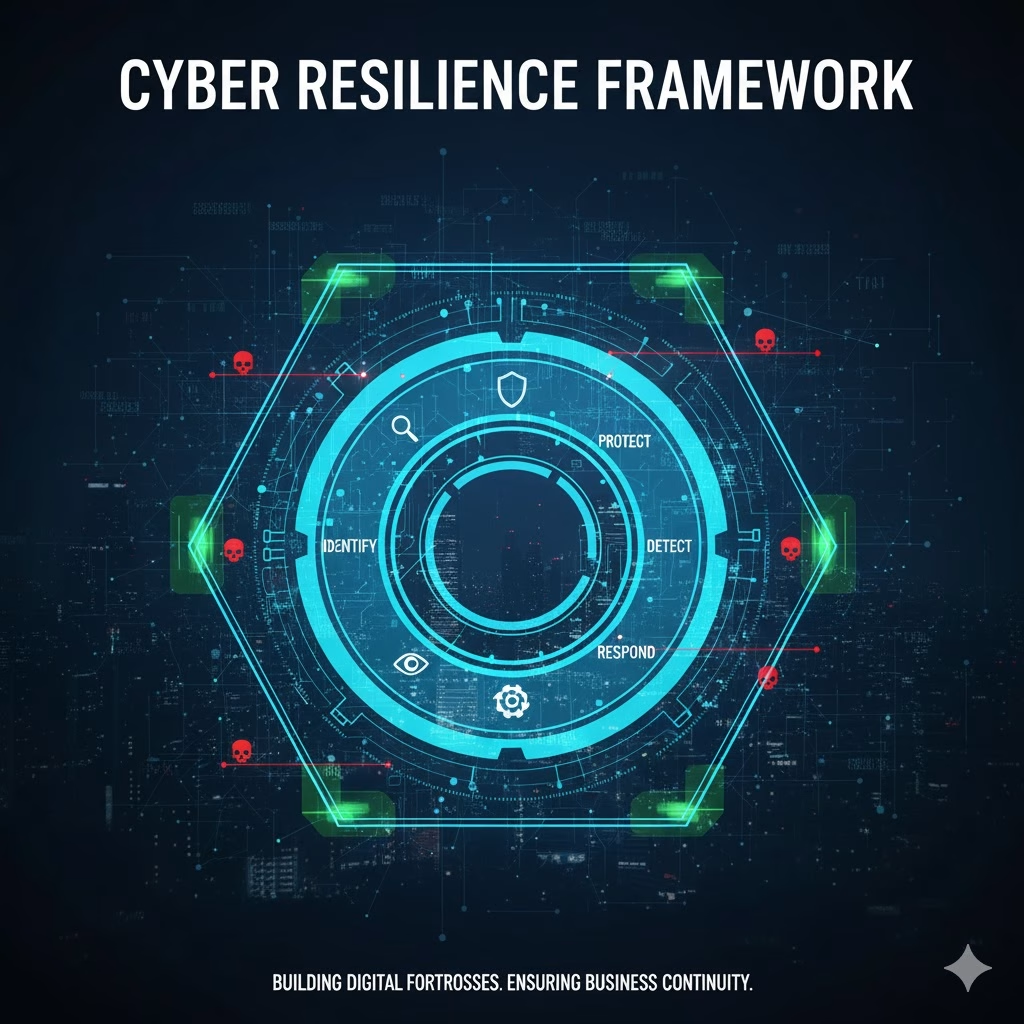
The Eden Kandinsky Cyber Resilience Framework
Our proprietary framework systematically embeds resilience into your entire digital lifecycle, across technology, process, and people.
Phase 1: Preparation and Hardening (Anticipate)
We build the foundational defenses necessary to withstand common attacks while preparing for the worst-case scenario.
- Continuous Threat Exposure Management (CTEM): Using insights from our Penetration Testing services, we continuously identify, prioritize, and validate the most critical security gaps.
- Immutable Backup & Disaster Recovery: Designing and implementing robust, tested backup systems that are logically air-gapped or immutable, ensuring recovery from catastrophic ransomware or accidental deletion.
- Zero Trust Architecture: Deploying granular access controls that limit the blast radius of any compromise, preventing an attacker from moving laterally once inside.
Phase 2: Detection and Response (Withstand)
Focusing on the moment of attack, this phase ensures rapid identification and controlled containment.
- Unified Detection: Integrating and tuning modern Security Information and Event Management (SIEM) and Extended Detection and Response (XDR) platforms to identify abnormal behavior quickly.
- Crisis Playbook Development: Developing detailed, tested, and cross-functional incident response playbooks for scenarios like ransomware, data theft, and cloud compromise.
- War Gaming and Simulation: Conducting realistic, immersive simulations with leadership and technical teams to stress-test your response capabilities and communication paths.
Phase 3: Recovery and Adaptation (Evolve)
This phase moves beyond simply getting systems back online, focusing on forensic analysis and structural improvement.
- Forensic Readiness: Ensuring that all recovery actions preserve necessary audit trails and forensic artifacts for legal and insurance purposes.
- Root Cause Analysis: Implementing a rigorous, non-punitive process to determine exactly how resilience failed, not just how the initial breach occurred.
- Adaptive Security: Feeding lessons learned directly back into Phase 1, updating security policies, controls, and architecture to prevent recurrence and increase future robustness.
Resilience is the Investment in Your Future
In today’s interconnected environment, investing in Cyber Resilience is a fundamental business investment, as critical as market research or product development. It is the assurance that when a threat inevitably lands, your business will bend, but it will not break.
Eden Kandinsky provides the strategic guidance and technical expertise to transition your security posture from fragile prevention to adaptive, enduring resilience.
Secure your continuity. Engineer your resilience. Partner with Eden Kandinsky today.